




5 spare parts every busy butcher's shop should keep in stock
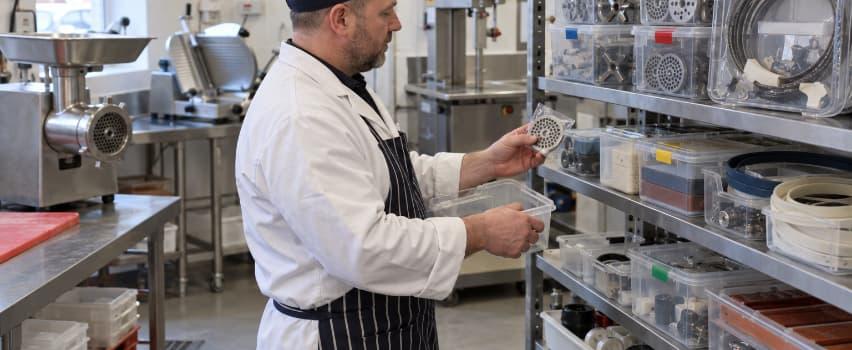
When you’re considering how to set up a butcher shop, choosing the right machinery is naturally high on the list. A reliable meat slicer, the best meat mincer and the right preparation equipment can all make a huge difference to how efficiently your team works, but there’s another part of the picture that can sometimes get less attention: the spare parts that keep that machinery working day after day.
At Butchers Equipment Warehouse, we’ve spent more than 30 years supporting professional butchers with equipment, machinery, consumables and replacement parts, so we know how valuable it is to have the right things available when you need them.
Even the best-made commercial equipment has components that will eventually need replacing, and having the right spares available can make dealing with those everyday wear-and-tear issues much simpler.
With that in mind, let’s take a closer look at the spares and consumables worth keeping in stock.
Why keeping spare parts in stock makes sense
If you’ve been in the trade for a while, you’ll already appreciate the value of having the right spare parts available when equipment needs them. For newer businesses, or shops that have recently changed their machinery or taken on more work, it’s a useful area to revisit when reviewing your setup.
The reason is simple – a machine can only work as well as the components that keep it running. Parts experience different levels of use and wear, and eventually some will need replacing. When that happens, having the correct replacement already in stock can save you from having to put an important piece of equipment on hold while you source one.
That matters most with machinery your team uses throughout the day. A mincer, slicer or bandsaw might be one part of a much larger operation, but if it’s temporarily unavailable, the effect can work its way through preparation, production and service. Having suitable spares ready helps keep a small component issue exactly that: a small component issue.
Essential spares for your butcher’s shop
The right spares list will look different from one business to the next. Your equipment, workload and the type of products you prepare will all influence what makes sense to keep on the shelf, so there’s no one-size-fits-all list to follow.
Instead, it’s worth looking at the equipment that forms part of your everyday operation and considering which replacement components you’d want within easy reach. From there, you can build a spares stock that suits the way your business actually works, rather than filling valuable storage space with parts you’re unlikely to need.
1. Mincer spares
Mincer knives and plates are useful spares to have on hand if your butcher’s shop relies on a mincing machine as part of its day-to-day work. They’re working parts, so their condition has a direct bearing on how your machine performs and the quality of the mince it produces. On top of that, it’s also worth thinking about other components like plungers, drive shafts and plate studs, which, when faulty, can lead to issues like inconsistent mince, reduced output or unusual noises from your machine.
2. Bandsaw blades and components
With a bandsaw, the blade is usually the first spare that comes to mind, but it isn't the only component that can need replacing – you should also consider spares like scrapers, blocks and springs. These may be small components, but when they become worn or damaged, they can affect how the saw operates, from the way the blade runs to the accuracy and consistency of the cut.
What you need to keep available will depend heavily on how the saw is used. After all, if you’re regularly cutting larger joints and bone, you’re putting very different demands on the machine than if you were only bringing the bandsaw into play occasionally.
3. Meat slicer blades, sharpening stones and belts
Next, meat slicer spares. When you're slicing ham, bacon, cooked meats or other products for the counter, consistency matters. A slicer that isn't cutting cleanly can leave you with slices that vary in thickness, affect presentation and make it harder to achieve the finish your customers expect.
Again, the blade naturally gets most of the attention, but the other components shouldn't be overlooked. Sharpening and honing stones help keep the blade in good condition, while drive belts are another part that can eventually need replacing.
Safety guards are also worth checking as part of your routine maintenance, particularly if there’s any visible damage. If slicing is a significant part of your day-to-day trade, knowing which parts your particular machine takes can save time when something needs replacing. It also means you can focus your spares budget on the components that matter most to the work you actually do.
4. Vacuum packer and packaging spares
For some butcher’s shops, vacuum packing is an occasional job. For others, it’s part of the daily routine, whether that means preparing meat for the retail counter, packing larger quantities for customers to take home or getting orders ready to go out to other businesses. When the packer is doing that much work, it becomes an important part of the whole process rather than an afterthought.
The trouble with vacuum packing equipment is that a relatively straightforward part can affect the finished pack. A worn lid seal, for example, can affect the machine’s ability to maintain a vacuum, while the sealing system needs to be in good condition to produce a proper seal around the bag. When a machine is being used to pack a steady stream of products, a fault at this stage can leave you with prepared meat waiting to be packed and orders waiting to be finished. Having the relevant spare or consumable available means a minor equipment issue is less likely to become a problem that gets in the way of the rest of the day.
5. Smaller essentials
It’s easy to think about spares in terms of the machinery doing the heavy work, but there are plenty of smaller pieces of equipment around a professional butchery that still have an important job to do. Retail scales, knife sharpeners, sterilisers and fly killers might not get the same attention, but a fault with one of them can still interrupt part of your working day and make daily operations trickier.
How to organise your spare parts stock
How you manage your spare parts will depend on your business. If you run a small independent butchery with just a handful of machines, you may only need to keep a small selection of essential spares close at hand. If you’re running a larger operation with more equipment and staff using it, you may need a wider range of parts and a more organised way of keeping track of them. Either way, there’s no need to overcomplicate things; the right setup is simply one that works for your business.
A few straightforward measures can make your spares much easier to manage:
- Give each type of spare a proper home – keep mincer, slicer, bandsaw and other parts in separate, clearly marked areas. If you have shelving available, giving each machine or equipment type its own shelf or section can make finding a replacement much quicker.
- Mark the storage clearly – write the make, model and part description on the box, bag or container holding the spare.
- Keep the original part number – if the packaging or paperwork gives you a manufacturer’s part number, keep that information with the spare or add it to your stock record. When you need another one, having the exact reference is far more useful than trying to describe a small component from memory.
- Keep frequently used items in known quantities – decide which spares you are likely to use throughout the year and keep a simple count of them. This could include mincer knives and plates, slicer sharpening stones or other regularly replaced items, depending on the equipment in your shop.
- Set a minimum level for key spares – once you know what you use regularly, decide how many you want to have available before placing another order. If you use two of a particular item in a month, for example, waiting until the cupboard is completely empty before reordering leaves you unnecessarily exposed.
- Store parts where they will stay in good condition – keep replacement components in a clean, dry area and leave smaller items in their packaging or a suitable container rather than loose in a toolbox or drawer. This helps prevent parts being damaged, contaminated or simply lost amongst other equipment.
- Make stock checking someone's responsibility – it doesn’t need to be a formal role, but one person should know they are responsible for checking the spares cupboard and making sure used items are recorded and replacements ordered.
- Review your list when your workload changes – if you start producing more sausages, take on more slicing work or replace an older machine, look at your spares at the same time. The parts you needed two years ago may not be the parts your current operation relies on most.
The aim is to make your spares useful rather than letting them become a box of miscellaneous components that nobody is quite sure about. A well-organised stock of relevant parts should be easy to understand and straightforward for your team to use.
Why getting your spares from a single supplier can make a difference
Running a butcher shop already involves keeping track of enough suppliers, orders and deliveries, and having to hunt down a different source every time you need a replacement part only adds another job to the list.
That’s where having a supplier you know you can rely on makes a difference. You have one place to check when a mincer plate needs replacing, a bandsaw needs a new component, or your slicer needs a fresh sharpening stone. It also means you’re dealing with a team that understands the equipment rather than having to start from scratch with a new supplier each time.
At Butchers Equipment Warehouse, we stock a wide range of spares and consumables for professional butchery equipment, including parts for all the best meat mincers, bandsaws, slicers, sausage fillers, vacuum packers, retail scales and more. We also stock parts from a range of established manufacturers, giving you plenty of options when it comes to finding the right replacement for your equipment.
Not sure which part you need for your particular machine? Our friendly team is on hand to help, so give us a call, and we’ll be happy to point you in the right direction. With competitive prices, express delivery options and a knowledgeable team available for advice, getting the spare you need doesn’t have to become a drawn-out job.
Ready to stock up? Explore our range now or give us a call on 01254 427761, and prepare your shop for whatever the working day throws at it.