



Is your meat slicer holding your business back? 5 signs to look for
When you first open a butcher shop, every equipment decision matters. You’re balancing your budget, your workspace, your product range, and the day-to-day demands of keeping customers happy. It’s completely understandable to start with the equipment you can afford at the time, especially when there are so many other costs involved in getting a shop up and running.
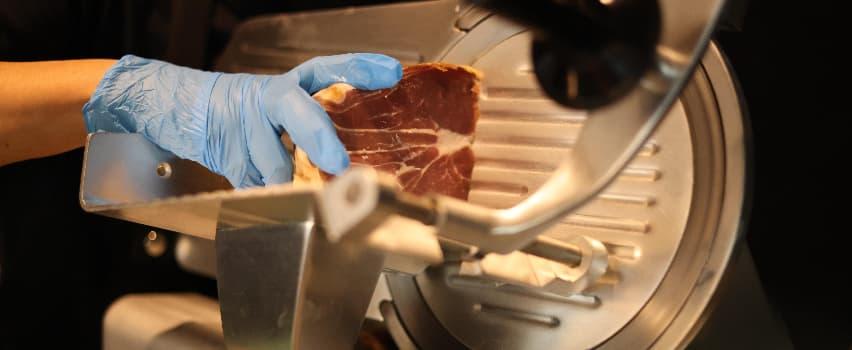
However, as your customer base grows and your daily workload increases, you may start to notice that some pieces of equipment are no longer keeping up. Your meat slicer is one of the machines that can have a bigger impact on your daily operation than you might expect. It’s used for preparing a wide range of products, so when it starts slowing you down, the effects can quickly be felt across your business.
A slicer rarely goes from working perfectly to completely broken overnight. More often, it gradually becomes less efficient. So, how do you know whether your meat slicer is still doing the job properly, or whether it’s actually holding you back?
Here are five signs it could be time to consider an upgrade.
1. Your slicer is becoming a bottleneck during busy periods
A good commercial meat slicer should help your team work faster and more efficiently. It should simplify preparation, allowing you to move through orders quickly without constantly adjusting your approach.
If your slicer is struggling to keep pace, you’ll usually notice it during your busiest periods. If you have a queue of customers waiting while you prepare sliced products, or your staff are spending far longer on jobs that should be straightforward, this could be a sign it’s not performing as efficiently as you need it to.
One of the biggest tells is the blade slowing down when cutting through larger or firmer products. A quality commercial slicer should handle products such as bacon slabs, hams, and other dense cuts smoothly. If the blade starts to struggle, stalls, or sounds like the motor is working harder than it should, there could be an issue with the motor, drive system, or internal components.
Another sign is when your team has to slow down the carriage movement just to get a decent finish. Instead of the machine doing the work, the operator has to compensate for the machine’s limitations. That might not seem like a huge problem when it happens occasionally, but those minutes quickly add up. If your slicer adds an extra 20 or 30 minutes to your preparation every day, that’s hours of lost time every month.
For a growing butcher shop, your machinery should be helping you increase capacity, not putting a limit on how much work you can comfortably take on.
2. You’re losing product through poor-quality cuts
Every butcher understands the importance of getting the most value from each piece of meat. Your margins depend on careful preparation, accurate portions, and reducing unnecessary waste wherever possible. A slicer that isn’t performing properly can quietly eat into those margins.
One common issue is poor finishing towards the end of a product. If your slicer is leaving behind a larger piece of meat than expected, shredding the final section, or struggling to hold the product securely, you could be losing a more usable product than you realise.
This often happens when components like the product grip, carriage, or holding mechanisms become worn. Instead of keeping the meat firmly positioned against the blade, the machine starts to lose control towards the end of the cut. You may also notice slices becoming uneven. For example, the first few slices may come out at the correct thickness, but as you continue slicing, they become thinner or inconsistent. This can be caused by wear in the thickness adjustment system or the gauge plate not holding its position correctly under pressure.
While a small difference in thickness might not seem important, it adds up over hundreds of slices. Whether you’re preparing products for your counter, creating customer orders, or selling pre-packed items, consistency matters. A reliable slicer gives you better control over your portions, reduces waste, and helps make sure every product leaving your shop meets the same standard.
3. Your slicer is taking up more time than it saves
Maintenance is part of owning any commercial equipment. Blades need sharpening, machines need cleaning, and parts will eventually wear with regular use. The issue comes when maintenance starts becoming a regular disruption rather than routine upkeep.
If you’re constantly stopping production to deal with problems, it’s worth looking at the bigger picture. Frequent issues such as slipping belts, faulty switches, loose components, or repeated visits by engineers can quickly turn an otherwise useful machine into an expensive inconvenience.
Many new business owners make the mistake of focusing only on the purchase price of equipment. However, the real cost of a machine is not just what you pay upfront. It’s also the time your business loses when it isn’t working properly.
A slicer that requires constant attention can cost you through:
- Lost preparation time
- Engineer call-outs
- Replacement parts
- Reduced staff productivity
- Delayed customer orders
Sometimes a simple repair is all that’s needed. A new blade or professional servicing can solve many common issues. That said, if you’re repeatedly putting money into an older machine just to keep it running, upgrading could be the more cost-effective option in the long run.
4. Your slicer is making your staff work harder than they should
The best commercial equipment should make your team’s job easier. It should allow your staff to work efficiently, confidently, and consistently throughout the day. If operators are having to fight the machine to get the results they need, something isn’t right.
You might notice staff having to apply more pressure when feeding products through, constantly adjusting the thickness setting, or spending extra time correcting poor-quality slices. These are signs that the machine is no longer performing as it should. A professional slicer should provide smooth operation, accurate thickness control, and consistent results without requiring unnecessary effort from the person using it.
This is particularly important as your business grows. The more orders you take, the more important it becomes that your equipment maintains quality and speed without creating extra work. The right machinery creates a smoother work environment where your team can focus on producing great products rather than managing equipment issues.
5. Your slicer is showing signs of age and wear
A slicer can continue running for years, but that doesn’t always mean it is still the right machine for your business. Over time, heavy use, cleaning chemicals, and general wear can affect the machine's condition. Pay close attention to the condition of critical areas such as the tray, blade guard, carriage, and other surfaces that come into contact with food.
Signs to look out for include:
- Rough or damaged metal surfaces
- Pitting or corrosion
- Cracked safety guards
- Difficult-to-clean areas where food can collect
- Worn components that no longer operate smoothly
Hygiene is also one of the biggest considerations in any butcher shop, and your equipment needs to support the cleaning standards you’re working hard to maintain. A newer commercial slicer can offer improved design features, easier cleaning, enhanced safety features, and greater reliability, helping you maintain high standards while simplifying your daily operations.
Is it time to replace your meat slicer?
If your current meat slicer is slowing you down, producing inconsistent results, or costing you more in repairs and wasted product, it may be time to invest in equipment built for the demands of a busy butcher shop.
At Butchers Equipment Warehouse, we stock a wide range of professional meat slicers from Noaw, one of the world’s leading manufacturers of commercial slicing equipment. Established in Italy in 1972, Noaw has decades of experience producing reliable, high-performance slicers designed for businesses that rely on accuracy, consistency, and durability every day.
Whether you’re preparing sliced meats for your counter, fulfilling customer orders, or looking to increase your shop’s capacity, having the right slicer can make a huge difference. Noaw meat slicers are built with precision in mind, helping you achieve clean, consistent cuts while providing the reliability needed for regular commercial use.
Made from robust aluminium alloy and designed for professional environments, they’re a great choice for independent butchers, delis, restaurants, and food businesses that need equipment they can depend on.
Upgrade your shop slicer with Butchers Equipment Warehouse
We understand that investing in new machinery is a big decision, especially when you’re starting out or growing your butcher shop. At Butchers Equipment Warehouse, we have over 30 years of experience supplying butchers’ equipment, so we understand how important it is to have reliable machinery that helps you work efficiently, maintain quality, and keep your business moving.
Alongside our professional meat slicers, we supply a wide range of butchery machinery to support your day-to-day operations, including meat bandsaws, meat mincers, sausage fillers, and more. We also stock essential spares and consumables to help keep your equipment performing at its best, as well as other essentials such as butchers’ knives and protective workwear, including chainmail gloves and chainmail aprons, to support a safe and efficient working environment.
Whether you’re replacing a single machine or fitting out a new shop from scratch, our experienced team is here to help you choose the right equipment for your workload, space, and budget. With thousands of satisfied customers and excellent Trustpilot reviews, we’re proud to support butchers across the UK with the machinery, parts, and expertise they need to keep their businesses running smoothly.
If you’re unsure which meat slicer is right for your shop, give our team a call on 01254 427761. We’ll be happy to talk through your requirements and help you find a machine that keeps your business moving.